

Dylan hates the internet.
He isn’t old. He was born well into the digital age, in fact. He just finds it overwhelming.
He likes video games—one game, really. A single title on PlayStation that he plays over and over. He knows every corridor, every enemy pattern, every place the music swells or drops away. Repetition doesn’t bore him; it steadies him. It narrows the world to something manageable. His friends are always chasing the next release, the next update. Dylan stays put. The game does what he needs it to do.
Social media doesn’t.
Instagram is too fast, too loud, like standing in the middle of a room where everyone is talking at once and no one is listening. If it slowed down—if it asked less of him—maybe he could learn its rhythms. It never does.
TikTok makes him want to throw something out a window.
Facebook feels exposed in the wrong way. Teachers. Relatives. People he doesn’t want knowing what he’s reading, thinking, or quietly worrying about.
Bluesky is too political.
X has too many trolls.
So Dylan mostly stays offline.
He reads instead.
Sci-fi. Noir. Graphic novels with vampires or zombies—stories where the rules are strange but consistent, where danger is at least honest about being dangerous. His town has a Barnes & Noble, an independent bookstore with creaky floors and handwritten staff picks, and a library that smells like paper and dust and something faintly electric. All of them are within walking distance. The B&N is easier to drive to, so that’s usually where he goes when he knows exactly what he wants.
Most of the time, he doesn’t have to go online for books at all.
He’s pushed himself into used-book websites a few times. A friend—also anti-corporate, also tired—introduced him to Bookshop.org, which he tolerates because it feels less like shouting and more like conversation. Still, he prefers places with doors. Bells. Humans.
Today, he doesn’t know what he’s looking for.
He wanders into the independent bookstore just to be somewhere quieter than his own thoughts. The front table is stacked with new releases. He circles it once, then twice. Picks something up. Puts it down. The spines begin to blur.
Eventually, he does the thing he hates most.
He asks for help.
“I’m looking for a book,” he says, already feeling ridiculous.
The bookseller smiles—not the customer-service smile, but the real one. Curious. Patient.
“What kind?”
Dylan shrugs. “It might not be here.”
“That’s okay,” she says. “We can order almost anything.”
He hesitates. “It’s not… online only, is it?”
She laughs softly, the way people do when they understand what you’re really asking.
“No,” she says. “And even if it were, we’d still find a way.”
He gives her the title. A vampire story. One he’s been thinking about for weeks.
She nods. Types. Pauses.
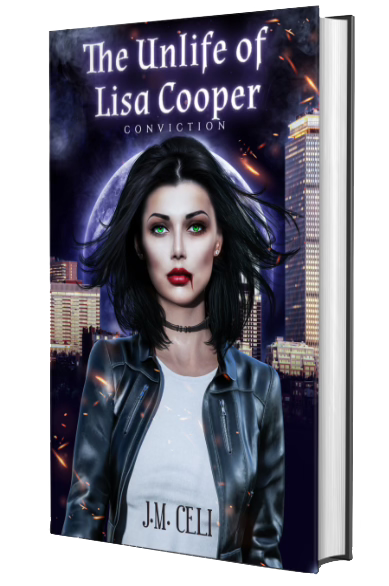
“Oh,” she says, typing the title (The Unlife of Lisa Cooper) into the search bar. “Yes. We can get this. Paperback. It’s also available as a hardcover.”
Something loosens in his chest.
As he steps aside from the counter, receipt folded carefully into his pocket, he becomes aware of someone behind him in line.
A young woman. His age, maybe a year older. Dark hair pulled back in a way that looks unplanned but definitely isn’t. She’s holding a canvas tote with something literary printed on it. He notices all of this at once and then immediately wishes he hadn’t.
She smiles at him in the polite, fleeting way strangers do when they’re about to occupy the same small space.
“Hey,” she says.
“Hey,” Dylan replies, softer than he intended. His face feels warm. He steps away too quickly, pretending to study a shelf he’s already decided against.
He lingers anyway.
At the desk, the bookseller turns to the woman.
“Hi—what can I help you with?”
The woman hesitates, then asks, not embarrassed, just hopeful,
“Hey, I was wondering if you could get a book that was self-published?”
Dylan freezes.
The bookseller doesn’t blink.
“Absolutely,” she says. “Do you have the title?”
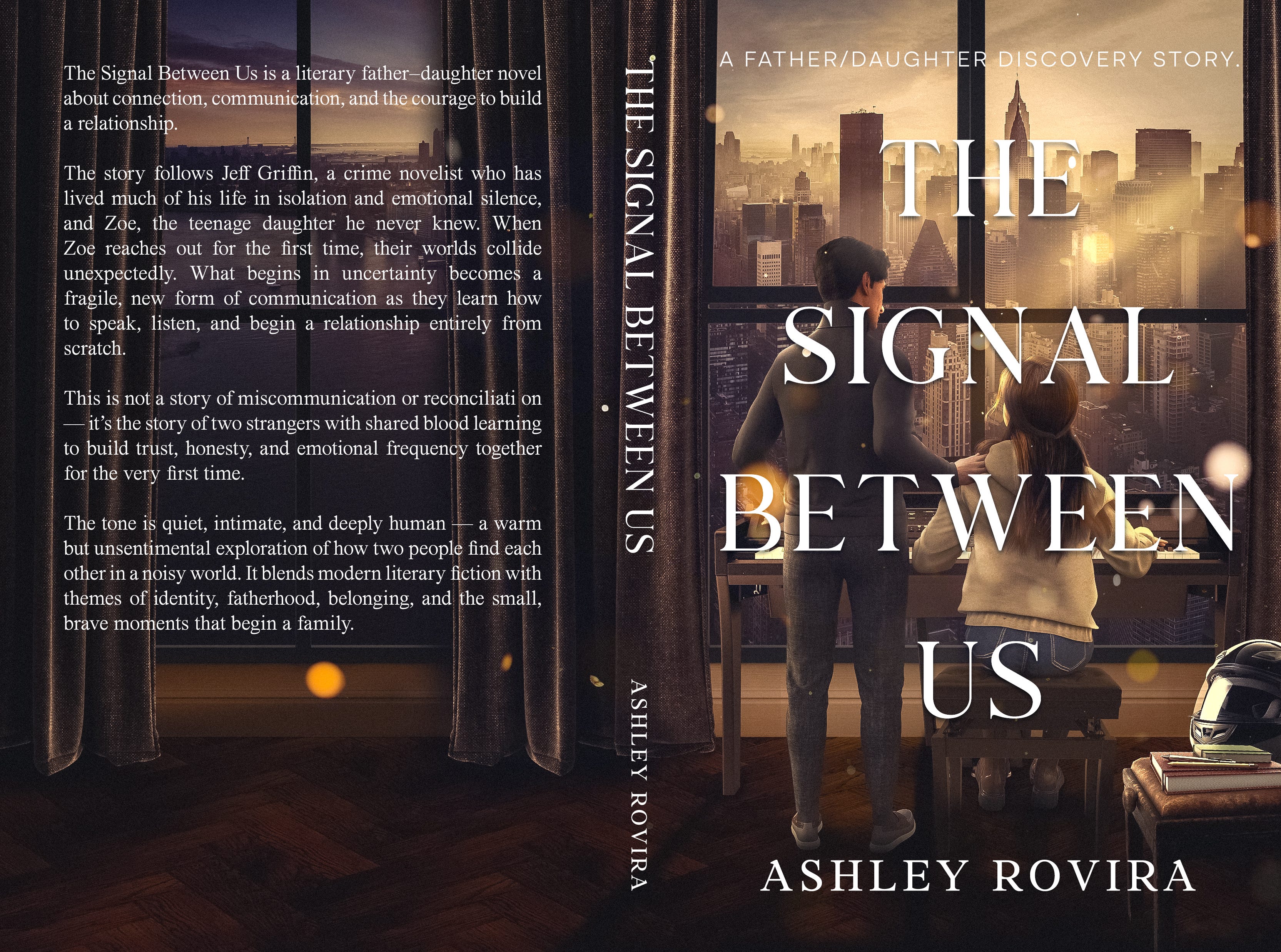
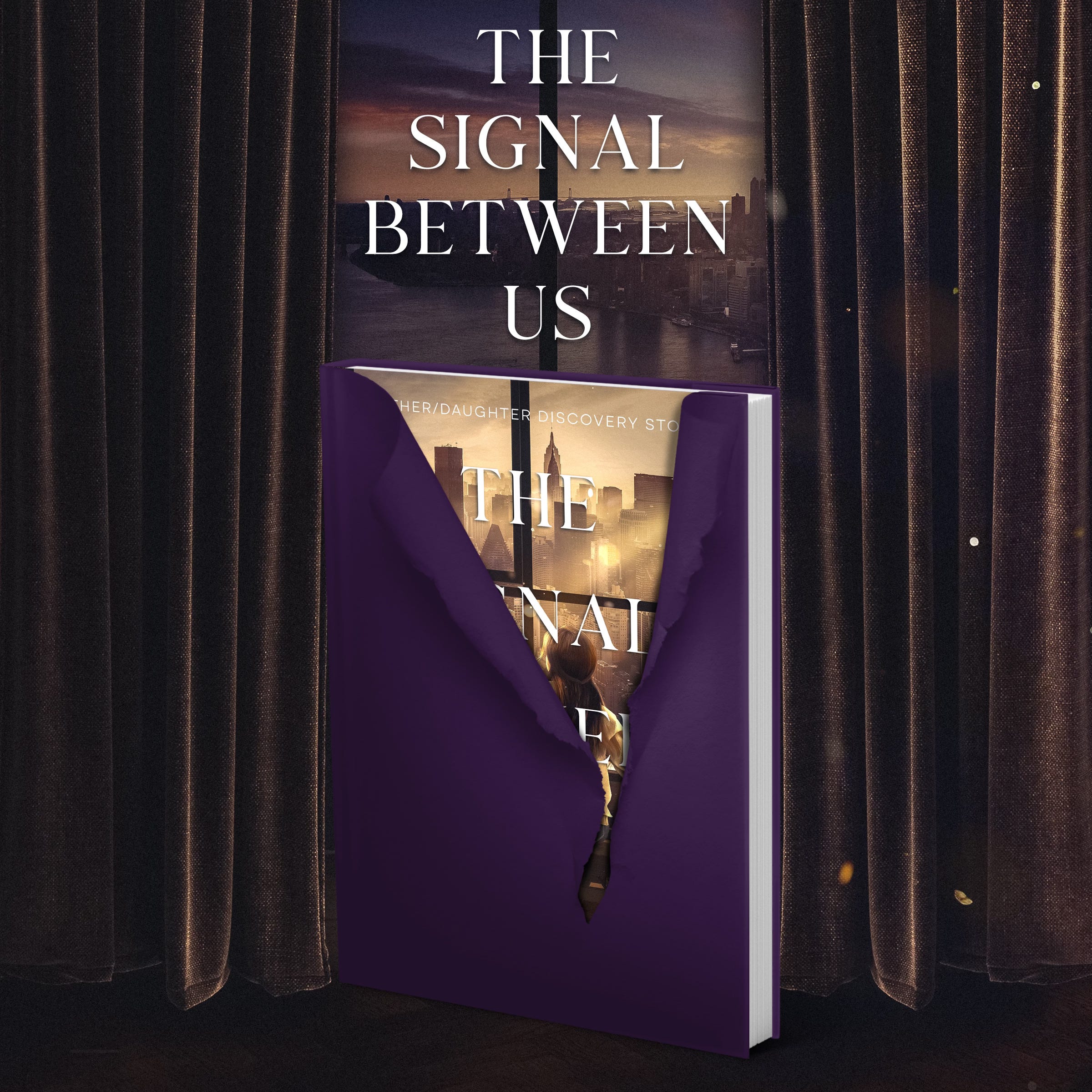
“Yes,” the woman says, relief threading her voice. “It’s called The Signal Between Us.”
Keys click. A screen refreshes.
“Oh,” the bookseller says, pleased. “Yes. We can order that. Paperback. No problem at all.”
Dylan doesn’t turn around. He doesn’t need to.
He steps out into the day.
It’s warm, foggy, threatening rain that never quite arrives. A gentle breeze moves through the street, nudging him as he walks—less a push than a reminder that the world is larger than the noise people keep making.
A few days later, his phone rings.
He almost doesn’t answer it. Unknown number.
“Hi, this is the bookstore,” the voice says. “Your order’s in.”
When he walks back in, the bell rings the same way it always does.
And she’s there again.
Their eyes meet. Recognition settles between them easily, like something that had just been waiting.
He takes his book from the counter—**The Unlife of Lisa Cooper**—the cover cool and solid in his hands.
As he turns, he sees her slip her own book into her bag. Not quickly. Just slowly enough.
**The Signal Between Us**.
She looks up, smiling now.
“You got yours too, huh?”
“Yeah,” Dylan says. “Looks like it.”
“I’m Maya.”
“Dylan.”
There’s a pause—not awkward. Just open.
“Want to grab a coffee?” he asks. “There’s a place across the street.”
“I’d like that,” she says.
The coffee shop is warm and busy in a gentler way than the internet. Cups clink. Espresso hisses. A low blur of voices that doesn’t demand anything from him.
They find a small table near the window.
Dylan sets his book down between them like proof.
“It’s about a vampire,” he says. “But not in the usual way. Lisa Cooper hates being one. She’s been a vampire since the nineteenth century, so she’s dead, technically—but she still has to exist somehow. If she doesn’t feed, she disappears. So she’s trying to figure out how to make it work.”
Maya’s face shifts into real attention.
“And there are all these other vampires who won’t leave her alone,” Dylan adds, warming to it. “Like—there’s a whole ecosystem of them. Power, rules, obsession. And she keeps getting pulled into it.”
“That sounds incredible,” Maya says.
He nods, and then, because it matters, he says, “She also has a dog.”
Maya smiles. “Of course she does.”
“Chewy,” Dylan says. “And he’s… kind of magical.”
Maya laughs, delighted. “Okay, sold.”
She pulls her own book out of the bag, turns it so he can see it again—not as an advertisement, just as a shared object, a thing with weight.
“Mine’s quieter,” she says. “A father and a daughter who don’t really know each other the way they should. It’s about absence, and what it does to people. And what happens when someone finally stops pretending the silence is normal.”
Dylan looks at the cover, then back at her. He doesn’t say it, but he understands: quiet stories can be the ones that hit the hardest.
They talk a little more—about what they like, what they can’t stand, what kinds of endings make them feel wrecked in the good way. The conversation doesn’t feel like performing. It feels like breathing.
When they step back outside, their coffees are in to-go cups, warm through the sleeves. The fog has thinned. The day still threatens rain, but it doesn’t deliver. The street looks freshly rinsed anyway.
They walk side by side, each holding a warm paper cup and an independent-bookstore bag folded carefully under one arm.
After a moment, Maya says, “There’s this author on the internet—”
She stops herself when she sees Dylan’s face.
“I know,” she says, laughing. “I hate it too.”
He smiles. “Okay. Go on.”
“But honestly,” she says, “I wouldn’t know about her if it wasn’t for the internet. She calls herself a genre hopper. Supernatural, horror, and then these middle-grade books that are somehow still a little unsettling. In a good way.”
“That sounds… complicated,” Dylan says, approvingly.
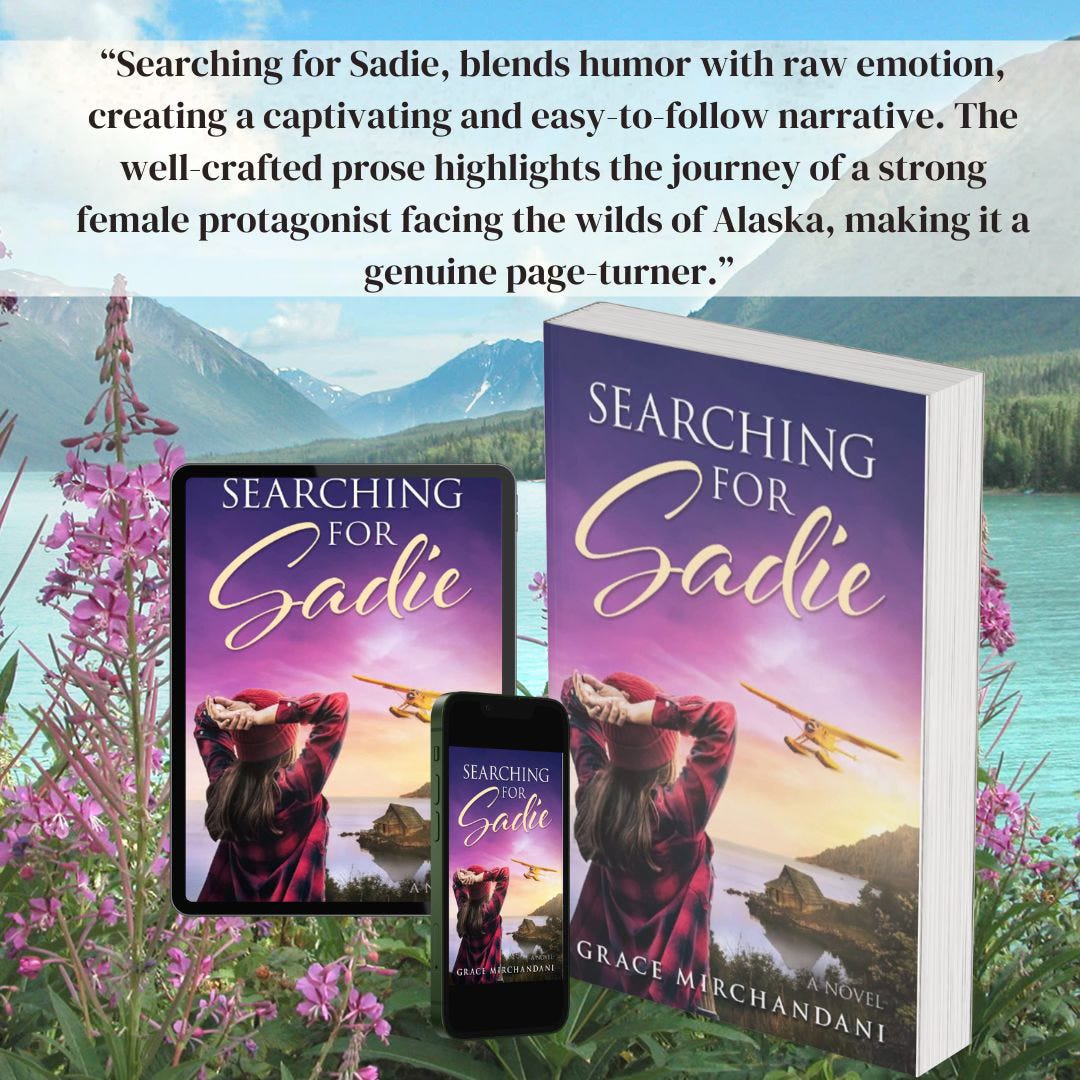
“There’s one I keep meaning to order,” she adds. “Searching for Sadie. Maybe after I finish this.”
She taps her bag.
They cross the street together. The fog thins. The rain never comes.
And for once, neither of them thinks about being online at all.
This was a fun read! Thank you for inserting my book into the story!